

Last Updated: October 26, 2026
Quick Summary
To soften coarse beard hair, rinse with warm water, then apply a light conditioner or beard oil to damp hair so the cuticle lies flat and holds moisture. Wash two to three times a week with a dedicated beard wash, and shave after warm water with a thin layer of non-foaming shave lotion.
- Warm water swells the hair shaft and relaxes the cuticle, so apply products to damp hair.
- Wash a beard two to three times a week with a dedicated beard wash, not regular soap.
- Use 2-3 drops of beard oil for stubble and 7-10 drops for a long beard.
- Work oil down to the skin, since dry skin beneath the beard is a common cause of itch.
- A pea-sized amount of leave-in conditioner is often enough for a short beard.
Table of Contents
- Why Is My Beard Hair So Coarse?
- Start With Warm Water Before You Groom
- How Often to Wash Your Beard Without Stripping Moisture
- The Best Beard Conditioner for Coarse Hair
- How to Soften Beard Stubble Before a Shave
- Applying Beard Products Correctly: Amounts, Frequency and Troubleshooting
- Combing, Brushing and Managing Itchiness
- Building Your Soft Beard Routine
- Frequently Asked Questions
Why Is My Beard Hair So Coarse?
Coarse beard hair is facial hair with a wide, rough outer layer, and coarse beard hair feels wiry and stiff to the touch. This texture comes from the hair's structure, not from poor grooming.
Beard hair is naturally coarser than scalp hair. It also grows at a different angle and sits on skin that is often drier. Add shaving, cold weather and harsh soaps, and the result is stubble that feels like wire.
The Role of the Hair Cuticle
Each hair strand has an outer layer called the cuticle. Think of it as overlapping roof tiles.
When the cuticle lies flat, hair feels smooth. When it lifts, hair feels rough. Hot water, aggressive washing and dry air all lift the cuticle.
Softeners work by helping the cuticle lie flat again. Water does this first. Oils and conditioners hold it there.
Skin Type and Beard Length Change the Answer
Two men can have the same beard and need different routines.
- Oily skin: needs lighter products and less frequent oiling
- Dry or sensitive skin: needs more moisture and gentler washing
- Short stubble: softens fast with warm water and lotion
Beard length matters too. Stubble has more exposed ends per centimetre, so it feels pricklier. Longer hair bends more easily and feels softer once conditioned.
Start With Warm Water Before You Groom
Warm water is the cheapest softening tool you own. It swells the hair shaft and relaxes the cuticle, so everything you apply afterwards works better.
Run a warm, damp flannel over your beard for 30 to 60 seconds before you shave or apply product. Not hot.
Follow this order every time:
- Rinse with warm water
- Pat partly dry, leaving the hair damp
- Apply your product while the hair still holds moisture
- Finish with a cooler rinse if your skin tends to flush
That last step is optional, but many men with sensitive skin find it calming.
How Often to Wash Your Beard Without Stripping Moisture
Wash a beard two to three times a week with a dedicated beard wash. On other days, rinse with warm water only.
The reason is simple. Regular soap and shampoo are built to strip oil from the scalp.
Adjust by lifestyle:
- Office-based week: two washes is usually enough
- Daily gym sessions or manual work: wash more often, but use a gentle formula
- Cold months: wash less and moisturise more
Watch out: if your skin feels tight or itchy straight after washing, you are washing too often or with something too harsh.
The Best Beard Conditioner for Coarse Hair
The best beard conditioner for coarse hair is one that coats the hair without weighing it down, holds moisture against the cuticle, and rinses clean enough that the skin beneath does not feel greasy.
Heavy butters and waxes can soften hair in the short term. In practice, they often sit on the surface, clog pores and leave the skin beneath feeling greasy.
How Conditioning Ingredients Actually Work
A conditioner does two jobs on coarse hair. First, it smooths the cuticle, the overlapping outer layer of each strand, so the hair feels less wiry and catches less on itself. Second, it slows water loss from the hair and the skin beneath, which is where most of the rough, dry feel starts.
- Jojoba oil: chemically close to the skin's own sebum, so it spreads easily and sits lightly without a heavy film
- Avocado oil: richer in fatty acids, useful on dry or brittle lengths but best kept to small amounts on oily skin
- Glycerine: a humectant that draws water into the hair and holds it there, which is why it works best applied to damp hair
A short ingredient list matters because every extra fragrance or preservative is another thing your skin may react to. If you have reacted to products before, patch test on the inner forearm for 24 to 48 hours before applying to your face.
Rinse-Out Versus Leave-In
Conditioners come in two broad types, and the choice changes how much you use and how often.
- Rinse-out conditioner: work a small amount through damp hair, leave for one to two minutes, then rinse lightly. Best for longer beards and for anyone prone to greasy skin.
- Leave-in conditioner or beard butter: apply a thin layer to damp hair and leave it. Best for dry, coarse hair in cold weather, but use less than you think, a pea-sized amount is often enough for a short beard.
If your beard feels coated or the skin beneath starts to itch after conditioning, you are either using too much or leaving in a product designed to be rinsed.
What to Check on the Label
- Jojoba or avocado oil: nourish without a heavy film
- Glycerine and aloe vera: draw in and hold water
- No thick waxes or butters in a rinse-out formula: less pore-clogging risk
How to Soften Beard Stubble Before a Shave
Soften stubble by shaving after warm water and applying a thin layer of non-foaming shave lotion to damp hair.
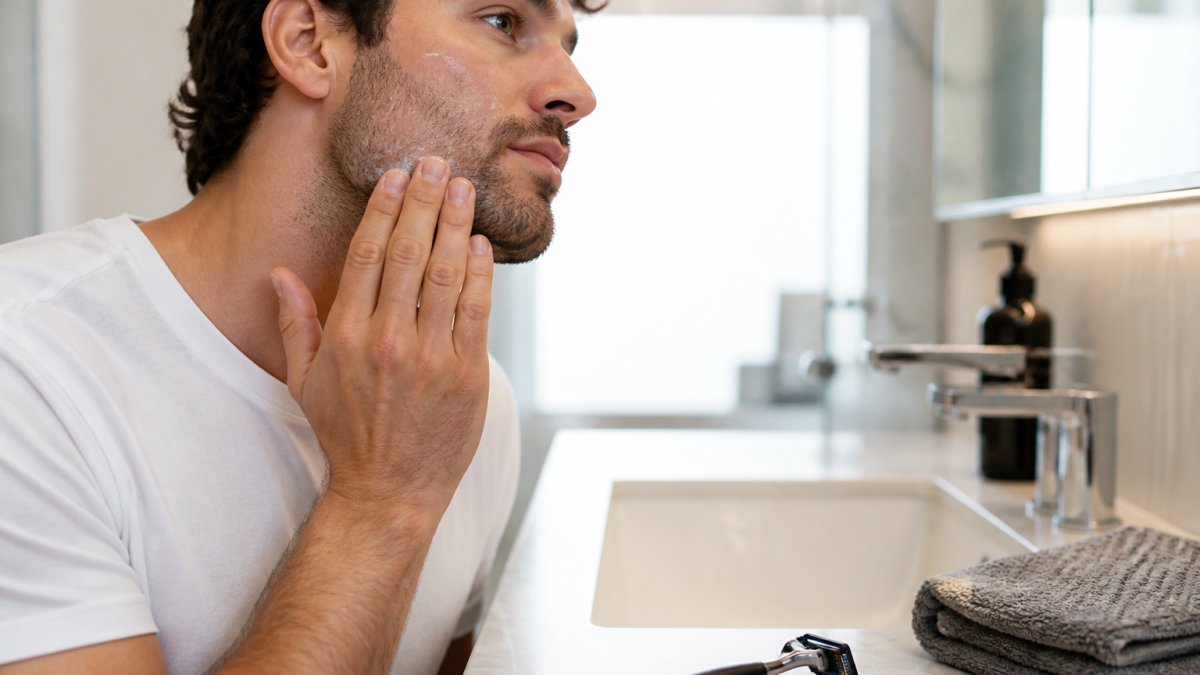
Foam looks impressive but adds air, not slip. A lotion sits closer to the hair and lets you see the edge of your beard line as you work.
Our Performance Shave Lotion is built for exactly this step.

Work in this order:
- Rinse your face with warm water
- Apply a thin layer over the stubble
- Shave with light, short strokes
- Pat dry and moisturise
If irritation is your main problem, our step-by-step guide to shaving without irritation covers the full method.
Applying Beard Products Correctly: Amounts, Frequency and Troubleshooting
Most rough beards are not a product problem. They are an amount problem. Too much oil leaves a greasy film. Too little does nothing.
How Much Product to Use
Use a few drops of beard oil for short beards, and a little more for longer growth. Warm it between your palms first, then work it in from the skin outwards.
| Beard length | Oil amount | Frequency |
|---|---|---|
| Stubble | 2-3 drops | Daily after washing |
| Short beard | 3-5 drops | Daily |
| Medium beard | 5-7 drops | Daily, plus conditioner twice weekly |
| Long beard | 7-10 drops | Daily, plus conditioner three times weekly |
Conditioner follows the same logic. A small amount worked through damp hair is enough. Rinse lightly or leave it in, depending on the product.
When It Still Feels Rough
If your beard still feels coarse after two weeks of consistent care, check these first:
- You are applying to dry hair. Products spread poorly on dry hair. Dampen it first.
- You are skipping the skin. Oil on the hair alone leaves the skin beneath dry and flaky. Work it down to the skin.
- Your water is very hot. Turn the temperature down.
Persistent redness, flaking or itching that does not settle with gentler habits is worth showing to a pharmacist or GP. Skin conditions such as seborrheic dermatitis can look like ordinary dryness.
Combing, Brushing and Managing Itchiness
Combing does two jobs: it spreads product evenly and it helps the hair lie flat. Both reduce the rough, wiry feel. But itchiness is usually a skin problem, not a hair problem, and treating it as a hair problem is why so many men keep scratching.
Why a Coarse Beard Itches
Itch under a beard usually comes from one of three things:
- Dry skin beneath the beard. The skin under facial hair is often drier than the rest of the face because it is harder to moisturise and gets less attention. Dry skin itches.
- Product residue. Oil or conditioner that sits on the skin without being worked in or rinsed can trap sweat and irritate the skin.
- Hair ends catching the skin. In short stubble, sharp cut ends brush against the skin as you move your face, which feels like itch even when the skin is healthy.
That is why moisturising the skin, not just the hair, is the single most useful habit. Work a few drops of oil or a light moisturiser down to the skin with your fingertips, not just over the surface of the beard.
Choosing and Using a Comb or Brush
- Wide-tooth comb: best for medium and long beards, where a fine comb would pull and break hair.
- Soft boar-style brush: best for short beards and stubble, where it lifts dead skin and spreads natural oils without scratching.
- Fine comb: only for tidying edges, not for working through the length.
Work from the skin outwards, not the other way round. Start at the base of the beard and comb down and out, so you lift dead skin and spread product from the root. Light, steady strokes work better than hard brushing, brushing hard to 'train' the beard irritates the skin and can break hair.
A Short Itch-Control Routine
- Wash less often, with a gentle beard wash rather than regular soap.
- Moisturise the skin under the beard daily, working product down to the skin.
- Brush daily with a soft brush to lift dead skin and spread oils.
- Avoid scratching, it breaks the skin and invites irritation.
- If itch persists, strip back to one product at a time to find the trigger.
A common mistake is brushing hard to 'train' the beard. Light, steady strokes work better and do not irritate the skin.
Building Your Soft Beard Routine
A soft beard comes from a short, repeatable routine, not a shelf full of products. If you want to keep costs down, our affordable men's skincare routine UK guide shows how to pair these steps with a simple overall routine. Here is the version we recommend.
Daily
- Warm water rinse
- A few drops of oil on damp hair, worked to the skin
- Comb or brush through
Two to three times a week
- Beard wash instead of plain water
- Conditioner through the length
Before every shave
- Warm water
- Thin layer of shave lotion
- Shave, pat dry, moisturise
The Shave Lotion & Moisturiser Duo covers the shave and the aftercare in one set at £15.95.

Frequently Asked Questions
Does beard oil soften coarse hair?
Beard oil helps, but it works best as part of a routine rather than on its own. Oils lubricate the hair strands and hold moisture against the hair cuticle, which makes coarse beard hair feel smoother and easier to comb. Apply a few drops to damp hair and work it through to the skin beneath, then comb to distribute. If your beard still feels rough after a week of daily use, the wash and conditioning steps in your routine need attention first.
How long does it take to make a coarse beard feel softer?
Most men notice a difference within one to two weeks of a consistent routine: warm water before grooming, washing less often, conditioning, and applying product to damp hair. Hair texture is largely genetic, so you are improving how the hair feels and behaves rather than changing its structure. Expect a softer, more manageable beard rather than a completely different hair type, and keep the routine going to hold the result.
Can you soften beard hair naturally?
Warm water, a gentle wash and a conditioning step are the natural core of any softening routine, and they cost very little. Combing daily distributes your skin's own oils along the hair, which helps too. Where products come in is holding that moisture in place between washes. A lightweight, non-clogging formula applied to damp hair does that job without leaving residue, and it keeps the skin beneath the beard comfortable.
Does trimming make beard hair softer?
Trimming does not change the hair itself, but it removes split or weathered ends that feel roughest. Shorter hair also lies flatter and tangles less, which makes a coarse beard feel more manageable. If you shave rather than grow, softening beard stubble before the razor passes is the step that matters most: warm water first, then a thin layer of shave lotion to soften facial hair and give the blade a smooth glide.
Coarse beard hair rarely needs more products. It needs warm water, less stripping, and a light lotion that softens hair while it protects skin. That is the whole idea behind 99 Ninety Nine: non-foaming formulas without waxes or butters, made and tested in the UK, in fully recyclable tubes. Start with the Performance Shave Lotion or the Duo, give it two weeks of consistent use, and judge the difference for yourself. Get started with 99 Ninety Nine and build a routine your skin can keep up with.

Share:
7 Steps to Recycle Men's Grooming Packaging Properly